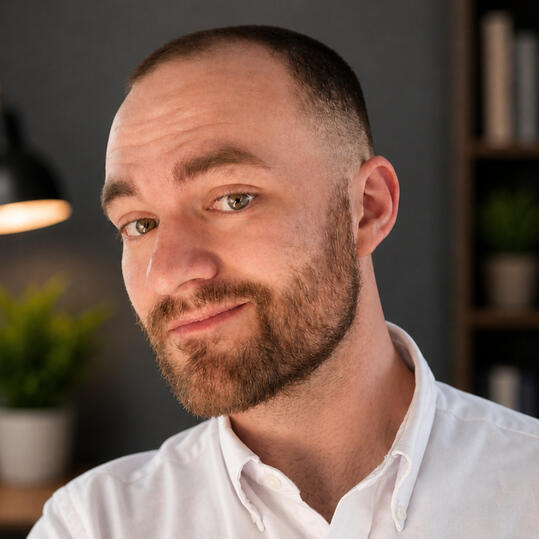
Brant entrekin
PhD candidate in philosophy
University of Tennessee, Knoxville
[email protected]
About
Hello! I am Brant Entrekin. I am a PhD candidate in philosophy at the University of Tennessee, Knoxville. I am also in graduate certificate programs for religious studies and for women, gender, and sexuality studies.My research is primarily in social/political philosophy and applied ethics. I am currently completing a dissertation on allyship in social justice movements.I also have research interests in philosophy of religion and religious studies. I am primarily interested in the relationship between religion and technology, thinking about how religious traditions utilize new technologies in practice.I am also very passionate about teaching. I have taught a variety of courses, including introduction to philosophy, various courses in applied ethics, critical thinking, and introduction to world religions.
Research
Social and Political Philosophy
My work in social and political philosophy focuses on oppression, privilege, and social movements. My current dissertation project examines the nature and norms of allyship. I analyze allyship via a role ethics framework to argue that allyship requires a transformation of the various social roles that a privileged person occupies that contribute towards structural injustice. From that, I then consider the questions of when allies should defer to the marginalized, when they have the standing to take initiative on their own, and how these norms change over time.Applied Ethics
A second strand of my research focuses on applied issues that result from persistent oppression and structural injustice. I am interested in applied philosophy of language to investigate how oppression reproduces itself via mechanisms like dogwhistles, echo chambers, and structural gaslighting. I am also interested in the rather ordinary, mundane ways that structural injustice can implicitly shape our lives. I am currently co-authoring a paper on how structural ableism can cause injustice in romantic life for those with disabilities.Religious Studies
I also work in religious studies and philosophy of religion. Here, my research has primarily focused on how religious traditions change in interaction with new technologies. I have published a paper on how A.I. chatbots might be utilized for mystical religious practices. I am also interested in the way that American evangelical Christianity has utilized new technologies like film and social media to support and justify right-wing political movements.My recent published work can be found on my PhilPeople page:
The Politics of Privilege: Allyship in social justice movements
Social justice movements routinely call on the relatively privileged to join them as allies, and the advice offered to those allies is notoriously hard to follow: speak up but do not speak over, use your privilege but do not center yourself, defer to those most affected but do not make them teach you. My dissertation argues that this apparent incoherence reflects the genuine complexity of allyship rather than confusion on the part of activists, and it offers the first sustained philosophical account of allyship as a relationship in its own right.I argue that allyship is a distinctive form of solidarity holding between a relatively privileged person and an oppressed group, governed by norms that vary with the social locations of those who stand within it. Being an ally requires recognizing and actively using one's privilege rather than merely disavowing it. Drawing on Robin Zheng's role ethics, I analyze allyship as a role that reshapes how one occupies one's other social roles: because social roles are sites where oppressive norms are either entrenched or resisted, privilege supplies the latitude to perform those roles transgressively.I then take up the ethics of allyship through the question of deference. Standpoint-theoretic arguments hold that privilege bars allies from knowing facts about oppression and that allies therefore owe deference to the oppressed. I distinguish practical from epistemic deference, defending the first while qualifying the second. Allies have moral and political reasons to defer in action to the plans movements settle on, but their epistemic disadvantage can be overcome through a norm of active listening, which grounds a process of ally learning that proceeds through resistant action and reflection on it.The project closes by turning to movements as institutions. Drawing on Ann Russo's work on feminist accountability, I argue that movements must build deliberative and accountability practices, calling in among them, that make ally learning possible without sacrificing the fair treatment of their most vulnerable members. What we may ask of an ally depends on what the movement has built to receive them.
Teaching
I am very passionate about teaching philosophy. My teaching is focused on introducing students to the skills and virtues they need to think philosophically and how to apply those lessons to issues in their everyday life.In the classroom, I often use a variety of active-learning strategies that require students to interact with the material rather than passively consume it. For example, I have organized a professional responsibility course in a "fishbowl" style, I frequently require students to serve as discussion facilitators and create original questions for classroom discussion, and I will employ various games and workshops to illustrate philosophical ideas.For assessments, my main focus is to have students apply philosophical reasoning and scrutiny to issues in their everyday lives. For instance, I have utilized a journal activity in multiple courses that requires students to use our course content to investigate the world around them in a new way, such as interviewing a friend or family member about a controversial moral issue and then reconstructing their argument in the language of the course. I also frequently utilize public philosophy assignments to have students create philosophical arguments that are rigorous but accessible to demonstrate how philosophical thinking can be broadly applied. Students in my courses have created TikToks, podcasts, op-ed articles, and short films, and I look forward to expanding my public philosophy pedagogy in future courses.Click the button below to see a sample of the various syllabi I have developed and utilized in the past.
cv
Click the button below to access a current copy of my CV
Contact